 Twolight
Relationship check-in questions for a weekly 20-minute talk
A relationship check-in is a short, regular conversation where you review how the week went for the two of you. Keep it to 20 minutes, start with appreciation, share one thing to improve and plan the next week. The questions and the script below make it easy to start.
Coming soon to iPhone
What is a relationship check-in?
It is a planned conversation, usually weekly, about the relationship itself: how connected you felt, what went well, what was hard and what you want from the coming days. The point is to catch small irritations while they are still small, and to say thank you while the memory is fresh.
A check-in is not a performance review. It should end with both of you feeling slightly closer. If it regularly ends in an argument, shorten it, move the hard topic to its own conversation and lean on the appreciation part.
How long should it take and when should we do it?
Twenty minutes is enough. Choose a day and time when you are both rested and unhurried, such as Sunday afternoon or Friday evening, and keep it consistent. Put phones away and sit side by side or on a walk. Some couples find that walking makes it easier to be honest.
Do not hold it right after a fight or when one of you is hungry. If the week was unusually hard, shorten the format to appreciation and plan, and leave the rest.
What is a simple five-step script?
This structure keeps the conversation balanced. Set a timer for four minutes per step if it helps:
- Appreciations: each of you names two things you appreciated about the other this week.
- What went well: one moment you want more of.
- One thing to improve: each shares one concrete request, phrased softly.
- Plan: decide one thing for the next week, such as a date or a task.
- Close: a hug, a thank you or a favorite song.
What are good check-in questions?
Pick two or three each week instead of using the whole list:
- What was the best moment of our week?
- When did you feel closest to me?
- Was there a moment you felt unheard?
- What is one thing I did that you appreciated?
- What was hardest for you this week, and how can I help?
- What do you want more of next week?
- Is there something you have been meaning to tell me?
- How are we doing on time for just the two of us?
- What is one small thing I could do tomorrow to make your day easier?
What questions work for the first months and for long-term couples?
New couples can use the check-in to learn each other's preferences: What felt good this week? What would you like us to try? Long-term couples often benefit from questions that notice change: What part of our routine would you like to freshen up? What have I stopped asking you about?
A deck question can serve as the closing. In Twolight, a card such as What is a small moment from this week you want to remember? works well at the end. The app's Our month card also gives a gentle picture of your habit: questions answered, longest streak, favorite deck and Guess Me right.
How do I raise a complaint during a check-in?
Use a soft start-up and one request. Instead of You never plan anything, try I miss feeling like we have something to look forward to. Could we choose one evening this week? Summaries of couples research describe harsh start-ups as a pattern to avoid, so a gentle opening matters more than the topic.
Receive the complaint by saying back what you heard. Then respond with what you can do, not with a defense. If the topic is large, say so and book a separate time: Let us give that its own evening. Twolight's Talk later? tool sends a calm request to schedule one.
How can the daily question support the weekly check-in?
The daily question keeps you in contact between check-ins, so the weekly talk has less to carry. When both of you have answered each evening, you already know the highs and lows of the week. The check-in becomes a summary and a plan instead of a reunion.
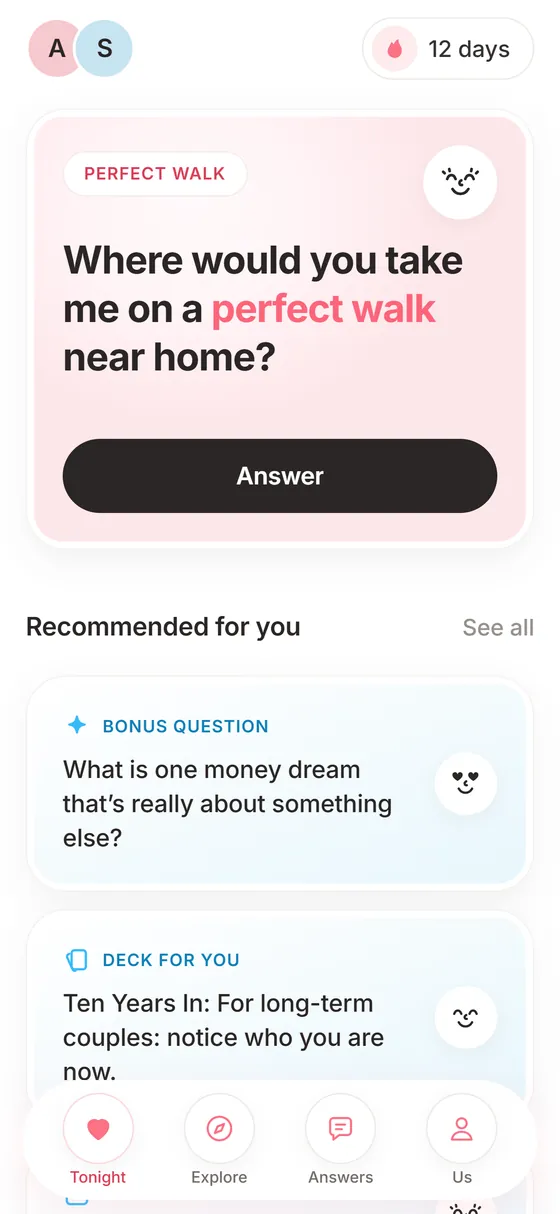
Twolight also keeps a history. The Answers tab lists every question with filters for All, Unanswered and Starred, and you can add private notes to a thread. A quick scroll through the week is a good prompt for the first check-in step.
What does a sample check-in sound like?
Here is a short example between two partners, to show the tone. A: One thing I appreciated this week was that you picked up the groceries without being asked. B: Thank you. I appreciated that you waited for me to finish talking on Tuesday. A: A moment I want more of is the walk on Saturday. B: Me too. My one request is that we keep one evening free of plans. A: Yes. Let us choose Thursday.
Notice how little drama there is. The structure carries the conversation, and each request is small enough to say yes to. That predictability is the real benefit of a routine: you do not need to feel brave to start, because the steps are already known.
What if one of us does not want to do a check-in?
Ask what feels uncomfortable. Some people hear check-in as a performance review. Offer a lighter version: a ten-minute walk with just the appreciation step, or a daily question answered at dinner. Make it clear that nobody is on trial.
Give it a trial of three weeks and then review. If it still feels bad, change the format instead of dropping the habit: a different day, a shorter time, written notes exchanged before the talk. The aim is a rhythm that fits both of you, not a particular script.
What are the ground rules?
A few rules keep the ritual safe. Each person speaks without interruption. Criticize the situation or the behavior, never the person. Anyone can pause for five minutes. Nothing said in a check-in is used as ammunition in a later fight.
If check-ins repeatedly feel tense, try a gentler format: appreciations only for a few weeks. Over time you can add the other steps. If you notice the same issue returning with no movement, a licensed counselor can help. Twolight is a conversation aid and not therapy.
If a topic gets heated, pause with the repair kit and come back later. The guide to starting a hard conversation shows how to open the next talk calmly.
Frequently asked questions
How often should couples do a relationship check-in?
Weekly works for many couples, and some prefer every two weeks or monthly. Consistency matters more than frequency.
What should we avoid in a check-in?
Avoid blame, bringing up old fights and tackling several large topics at once. Keep to one request each and end with appreciation.
How do we start if we have never done one?
Start with five minutes: each says two things you appreciated this week. Add other steps after a few weeks.
Can a check-in replace couples therapy?
No. A check-in is a habit for ordinary maintenance. Persistent or serious problems deserve a licensed professional.
Does Twolight have a weekly check-in feature?
It does not have a dedicated one. The daily question, the Answers tab and the Our month card give you material for your own weekly talk.
Keep exploring
 Daily Question for CouplesOne question a night; answers reveal when both are in.Daily Questions for CouplesA small, regular question habit that survives busy weeks.How to Stop Arguing With Your Partner Over Small ThingsA practical routine for fewer fights: pause, soft start-up, one topic, repair.Questions to Ask Your PartnerSpecific questions sorted by depth, with examples for every stage.Pillow Talk Questions for Couples30 gentle bedtime questions sorted by mood, plus rules for keeping it warm.