 Twolight
How to listen to your partner without getting defensive
Listening well means giving your partner your full attention, letting them finish, saying back what you heard and asking one question before you answer. Defensiveness fades when you treat the first minutes as information gathering, not as a trial. Here are the steps, with phrases you can use tonight.
Coming soon to iPhone
What does it mean to listen to your partner well?
It means your partner leaves the conversation feeling understood, whether or not you agree. That is different from staying quiet while you prepare your reply. Active listening is the label for intentionally engaging with what is said, with the speaker receiving confirmation that their point has landed.
Wikipedia's summary also notes that most people overestimate how well they do this, which is useful to remember when you believe you already listen well. The test is simple: if you ask your partner whether they felt heard, what would they say?
What are the steps?
These five steps fit most everyday conversations:
- Stop what you are doing. Put the phone face down and turn towards your partner.
- Let them finish. Count to three after they stop before you speak.
- Say back the main point in one sentence: So the part that was hard was that I decided without asking.
- Ask one question that invites more: What would have helped?
- Hold your own reply until they say yes, that is it. Then share your side.
Why do I get defensive when my partner raises a problem?
Because a complaint can feel like a verdict on who you are. Your mind moves to protect you with an explanation, a counter-complaint or a correction. In a well-known model of conflict, defensiveness is one of four patterns (criticism, contempt, defensiveness and stonewalling) that make conversations harder, according to the Wikipedia summary.
The way out is to treat the complaint as information about how your partner experiences something. You can agree that their experience is real without agreeing that you did something wrong. I can see that felt bad to you is the first step to a useful conversation, and it admits no guilt.
What do defensive and open replies sound like?
The same facts can be answered in very different ways:
| Your partner says | Defensive reply | Open reply |
|---|---|---|
| You never ask how my day was. | That is not true, I asked yesterday. | I hear that you want me to ask more. Tell me about today. |
| I felt ignored at dinner. | I was tired, it was a long day. | That sounds lonely. What would have made you feel included? |
| I wish you would plan something. | I always plan things. | You would like to feel I am thinking about us. What kind of plan sounds good? |
What can I do when I feel myself getting defensive?
Slow your body first. Take one long breath out, relax your jaw and unclench your hands. Then say one honest sentence: I notice I am getting defensive, give me a second. Naming it takes the charge out of it and shows your partner you are trying.
If the feeling does not pass, ask for a short break and give a return time. Twolight's repair phrases include I need a few minutes, and then I want to come back to this. and Let me try saying that again, more gently. Use the words that fit and mean them.
How can I practice listening on an ordinary evening?
Practice in low-stakes conversations so the skill is there when you need it. A good format is the daily question: both of you answer privately, then read the answers and ask each other follow-ups. In Twolight your answers stay hidden until both of you have answered, so nobody simply echoes the other.
The Talk about it prompts that follow a reveal are listening practice by design: Tell me more about that, What does that feel like for you?, Did anything in my answer surprise you? In couch mode, one partner reads a card aloud and the other answers while the first listens, then you swap.
- Choose one question and take turns answering it.
- The listener says back one sentence before replying.
- Ask one follow-up question.
- Swap roles after five minutes.
How do I listen when I disagree?
Listening is not agreeing. You can say I see it differently and still show that you understood. The order matters: first reflect, then share your view. Try: I understand that you felt left out. From my side, I thought you wanted to rest. Let us find a way that works for both.
A useful rule is to understand before you explain. When you explain first, your partner hears a defense. When you understand first, your explanation arrives in a calmer room. Over time, both of you learn that being understood does not cost you anything.
How do I listen when I am tired or stressed?
Be honest about your capacity. I want to hear this and I am running on empty. Can we talk in an hour? is a better answer than a half-listening nod. Your partner will usually prefer a real conversation later to a distracted one now.
Small physical habits help. Sit down, put your hands in your lap, and keep your eyes on your partner. Take a breath before you speak. If your mind wanders, bring it back to the next word they say. The skill is mostly returning your attention, again and again.
What if my partner talks around the point?
Some people circle a topic before they reach it, especially when it feels risky. Resist the urge to hurry them along with so what do you want me to do? Instead, give it time and use gentle prompts: What is the part that matters most? What would you like me to remember from this?
If you are the one who circles, try writing the main point in one sentence before you start. Twolight's answer box is a small version of this exercise: you can write up to 1,000 characters, but one honest sentence is often enough to start the talk.
What should I avoid while my partner is talking?
A few habits undo good listening quickly:
- Interrupting to correct a detail.
- Offering a solution before they have said what they need.
- Checking your phone or the television.
- Rolling your eyes or sighing.
- Saying you are just being honest as a way to deliver criticism.
What if my partner does not listen to me?
Ask for what you need in a single sentence and at a good time: I would like five minutes where you just listen and do not fix anything. Many people assume you want advice and are relieved to hear that listening is enough.
If you often feel unheard despite clear requests, consider talking to a licensed counselor, alone or together. Twolight is a conversation aid and does not replace professional help.
For practice, the daily question gives you five quiet minutes to listen, and how to stop arguing over small things covers what to do when listening is hard.
Frequently asked questions
How do I stop being defensive in a relationship?
Notice the urge, breathe, and say back what your partner said before you reply. Treat their complaint as information about their experience, not a verdict on you.
What is active listening in a relationship?
It is paying full attention, letting your partner finish, reflecting the main point back and asking a question before you share your view.
How do I show my partner I am listening?
Face them, put devices away, nod, summarize in a sentence and ask one follow-up. Small signals such as eye contact and a calm voice matter too.
Should I give advice when my partner shares a problem?
Ask first: Do you want ideas, or do you want me to listen? Many people just want to be heard before they want solutions.
Does Twolight teach listening skills?
It gives you practice. The daily question, the Talk about it prompts and couch mode all pair a question with a turn to listen, though it is a conversation aid and not a course.
Keep exploring
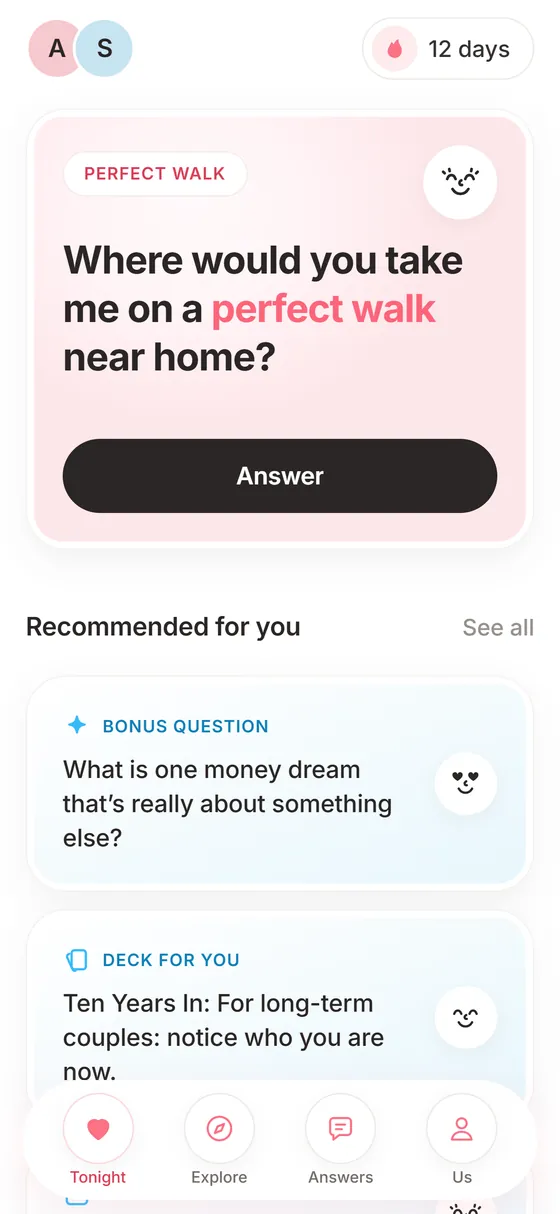 Daily Question for CouplesOne question a night; answers reveal when both are in.
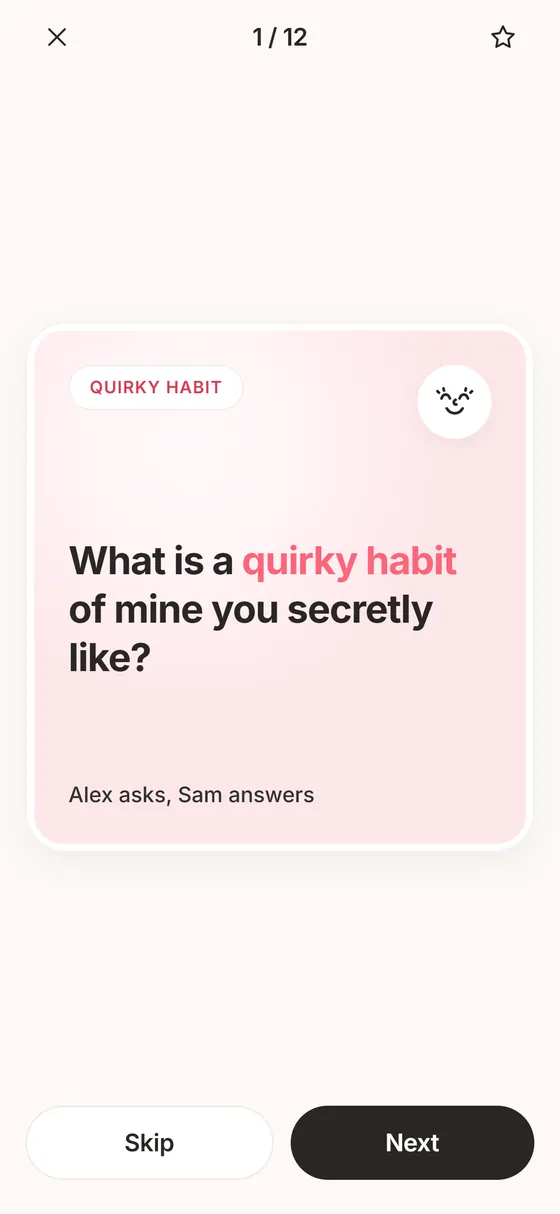 Couple Question Decks and Couch Mode on One PhonePass one phone back and forth with 14 decks of questions.How to Stop Arguing With Your Partner Over Small ThingsA practical routine for fewer fights: pause, soft start-up, one topic, repair.Questions to Ask Your PartnerSpecific questions sorted by depth, with examples for every stage.How to Talk About Money With Your Partner Without a FightValues first, then facts, then rules: a calm way to talk money, with scripts.